

The “Weird” Way New Wave Press Sets (And Hits) Book Launch Targets
It's not what you think.

When setting our launch targets for books at New Wave Press, we take a counterintuitive approach. While traditional publishers (and many self-proclaimed book marketing “gurus”) will encourage you to focus on pre-launch and launch week in order to cram as many sales in as possible, we eschew that paradigm.
“Launch week? Why not a launch year?“ we inquire boldly.
Instead of condensing as many sales as possible into a 1-3 week window and setting our targets (read: expectations) against those constraints, we broaden the definition of launch from a week to a full year.
This shift in perspective has five immediate effects:
Immediate Effect #1: It significantly reduces the pressure to hit arbitrary metrics and allows the author to focus on the quality of the book itself, not just the marketing blitz.
Immediate Effect #2: It allows for a slow turning of the dial that lets us gradually spread the message of the book across the internet via word-of-mouth in a more strategic way.
Immediate Effect #3: It accounts for the fact that busy prospective readers probably need to hear a message 5-10 times before remembering to buy the book.
Immediate Effect #4: It creates opportunities for influencers to see we are building steam and support us when their calendars open up along the way.
Immediate Effect #5: It supports the concept of creating perennial sellers, not just a “one and done” book that hits hard and fades fast.
That’s how we launched James Swanwick’s most recent book—and the results have been impressive.
Here’s the full case study:
Case Study: Inside the Metrics of James Swanwick’s Triple #1 Amazon Release

My company, New Wave Press, publishes expert nonfiction in health, wealth, and mindset. The intention of The Future of Publishing Substack is to show you both our philosophical approach to publishing and the actual strategies we employ when developing and launching bestsellers.
Think of it this way…
When your favorite artist goes on tour, they have likely spent a year or more writing the music for their album. Then, they’ll often go all over the world for 1- 2 years just promoting that album. They’re spending just as much time (or more) promoting the music as they did writing it.
They have to sing the same songs every night with just as much enthusiasm as the first night, because despite the fact that they are most likely sick of their own music already — for many people at the show, it might be the first (or only) time they’ll get to hear them live!
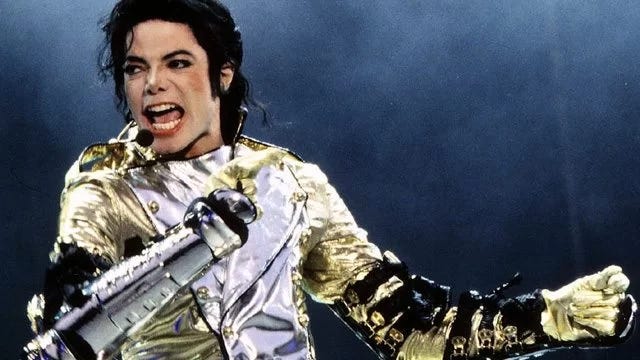
For instance, Michael Jackson’s HIStory World Tour ran 82 shows for 13 months from September 1996 to October 1997 — and he was showing up in top form every performance. He was just as concerned about opening night as he was about the finale.
What makes you think you should put in less work than MJ?
The long term approach is how you drive a piece of content into the culture. First, you spend time crafting it into the absolute best it can be. It’ll never be “perfect” — but every creator knows the difference between 93% and 99%. That 6% delta will keep you up at night wondering what could have been.
I once asked marketing legend Seth Godin about how to create work that stands out from the noise — and he told me:
“Don’t try to make your writing go viral. Write with one person in mind and make it so good that they can’t go to sleep that night without telling at least one other person.”
That advice stuck.
Once you’ve done that, buckle up. Be prepared to spread out the promotion over a long period of time and let the work…do the work.
Launch week is largely irrelevant if you’re confident in your product. Think longer.